Chapter 3
“An Introduction of Two Persons” by Edward William Bok
This story is the opening chapter of Edward William Bok’s Pulitzer Prize winning autobiography, The Americanization of Edward Bok. Mr. Bok, October 9, 1863–January 9, 1930, was a Dutch-born American editor of the Ladies’ Home Journal for thirty years (1889–1919). He also distributed popular homebuilding plans and created the beautiful Bok Tower Gardens in Florida.
The time frame of the story was during the reign of William I (Willem Frederik; August 24, 1772–December 12, 1843), king of the Netherlands from 1815 until his abdication in 1840.
Along an island in the North Sea, five miles from the Dutch coast, stretch a dangerous series of sandbars that have proved the graveyard of many a vessel sailing these turbulent waters. On this island once lived a group of men who, as each vessel was wrecked, looted the vessel, and murdered those of the crew who reached shore.
The government of the Netherlands decided to exterminate the island pirates, and for the job King William selected a young lawyer at The Hague.
“I want you to clean up that island,” was the royal order. It was a formidable job for a young man of twenty-odd years. By royal proclamation he was made mayor of the island, and within a short time the young attorney was appointed judge; and in that dual capacity he “cleaned up” the island. The young man now decided to settle on the island, and began to look around for a home. It was a grim place,
14
baron of tree or living green of any kind; it was as if a man had been exiled to Siberia. Still, argued the young mayor, an ugly place is ugly only because it is not beautiful. And beautiful he determined this island should be.
One day the young mayor-judge called together his council. “We must have trees,” he said; “we can make this island a spot of beauty if we will!” But the practical seafaring men demurred; the little money they had was needed for matters far more urgent than trees.
“Very well,” was the mayor’s decision - and little they guessed what the words were destined to mean - “I will do it myself.” And that year he planted one hundred trees, the first the island had ever seen.
“Too cold,” said the islanders; “the severe north winds and storms will kill them.” “Then I will plant more,” said the undisturbed mayor. And for the fifty years he lived on the island he did so. He planted trees each year; and he deeded to the island government land which he turned into public squares and parks, and where each spring he set out shrubs and plants. Moistened by the salt mist the trees did not wither, but grew prodigiously. In all that expanse of turbulent sea and only those who have seen the North Sea in a storm know how turbulent it can be — there was not a foot of ground on which the birds, storm-driven across the water-waste, could rest in their flight. Hundreds of dead birds often covered the surface of the sea. Then one day the trees had grown tall enough to look over the sea, and spent and driven, the
15
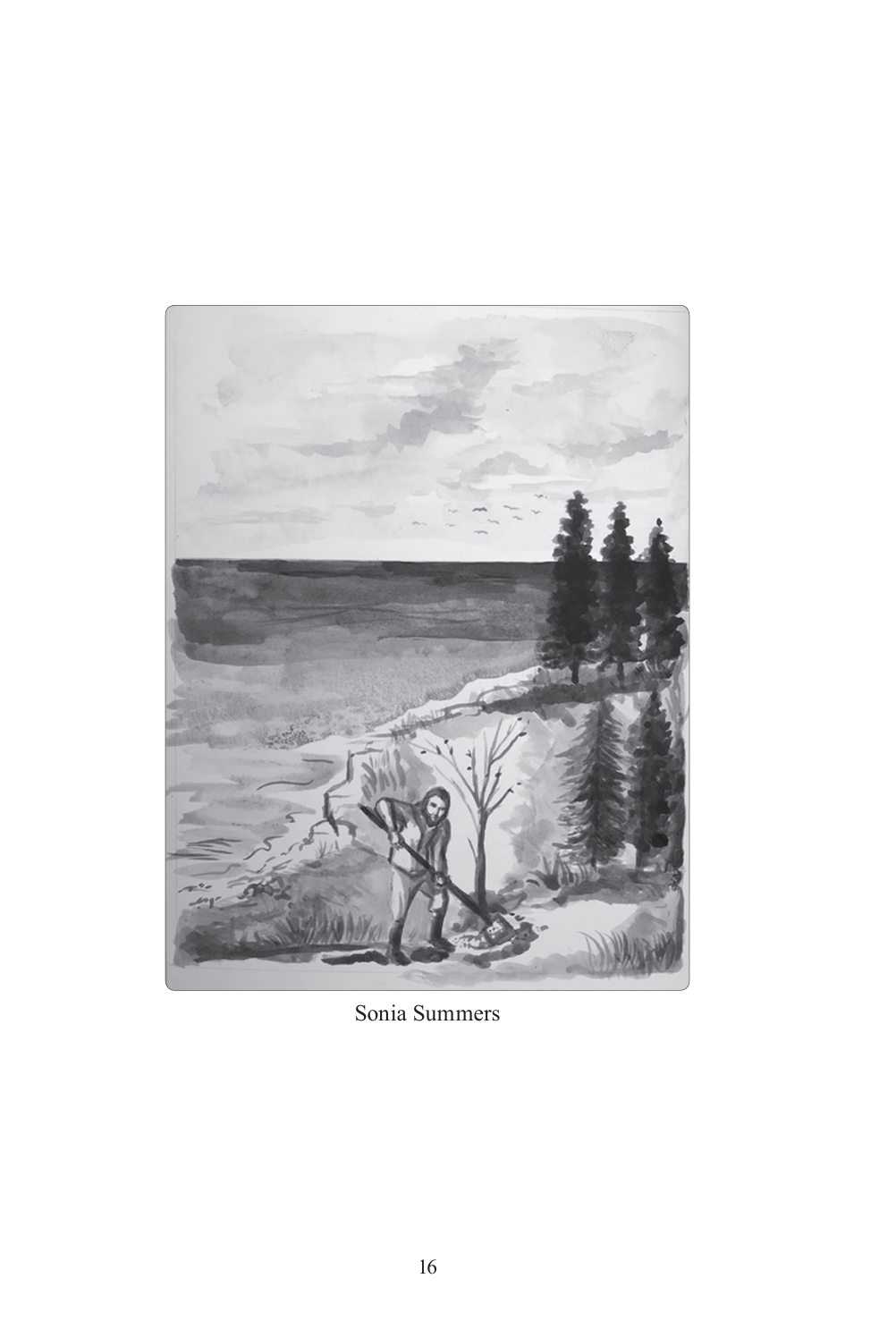
first birds came and rested in their leafy shelter. And others came and found protection and gave their gratitude vent in song. Within a few years, so many birds had discovered the trees in this new island home that they attracted the attention not only of native islanders but also of the people on the shore five miles distant, and the island became famous as the home of beautiful birds. It was not long before ornithologists from various parts of the world came to “Eggland,” as the farthermost point of the island came to be known as the home of seafowl, to see the marvelous sight, not of thousands but hundreds of thousands of birds’ eggs. A pair of storm-driven nightingales had now found the island and mated there; their wonderful notes thrilled even the souls of the natives; and, as dusk fell upon the seabound strip of land, the women and children would come to “the square” of “the burg” and listen to the evening notes of the birds of golden song. Meantime, the young mayor-judge, grown to manhood, had kept on planting trees each year, and setting out his shrubbery and plants, until their verdure now beautifully shaded the quaint, narrow lanes, and transformed into cool wooded roads what once had only been barren sunbaked wastes. Artists began to hear of the place and brought their canvasses, and on the walls of hundreds of homes throughout the world hang today bits of the beautiful lanes and wooded spots of the isle of the sea. The American artist William M. Chase took his pupils there almost annually. “In all the
17
world today,” he declared to his students, as they exclaimed at the natural cool restfulness of the island, “there is no more beautiful place.” The trees are now majestic in their height of forty or more feet, for it is nearly a hundred years since the young attorney went to the island and planted the first tree; today the trees that he planted drop their moisture on the lichen covered stone on his grave. This much did one man do. But he did more. After he had been on the barren island two years, he went to the mainland one day, and brought back with him a bride. It was a bleak place for a bridal home, but the young wife had the qualities of the husband. “While you raise your trees,” she said, “I will raise our children.” And within a score of years, the young bride sent thirteen happy faced, well-trained children over that island, and there was reared a home such as is given to few. Said a man who subsequently married a daughter of that home: “It was such a home that once you had been in it you felt you must be of it, and that if you couldn’t marry one of the daughters you would have been glad to marry the cook.” One day when the children had grown too man’s and woman’s estate the mother called them all together and said to them, “I want to tell you the story of your father and this island,” and she told them the simple story that is written here. “And now,” she said, “as you go out into the world, I want each of you to take with you the spirit of your father’s
18
work, and each in your own way and place, to do as he has done, make you the world a bit more beautiful and better because you have been in it. That is your mother’s message to you.” The first son left home for the Dutch mainland, where he took charge of a small parish; and when he had finished his work he was mourned by king and peasant as one of the leading clergymen of his time and people. The second son to leave the island home went to South Africa, where he settled and became one of “the Boers.” Tirelessly he, with them, worked at the colony until towns and cities sprang up and a new nation came into being: The Transvaal Republic. The son became secretary of state of the new country, and to-day the United States of South Africa bears tribute, in part, to the mother’s message to “make the world a bit more beautiful and better.” A third son, scorning his own safety, plunged into the boiling surf on one of those nights of terror so common to that coast, rescued a half-dead sailor, carried him to his father’s house, and back to a life of usefulness that gave the world a record of imperishable value. For the half-drowned sailor was Heinrich Schliemann, the famous explorer of the dead cities of Troy. One daughter worked beside her husband for forty years, and when he passed away, he was regarded as one of the ablest preachers of his land, speaking the message of man’s betterment.
19
Another daughter ministered unto and made a home for forty years for one who could see or hear not. So they went out into the world, the girls, and boys of that island home, each carrying the story of their father’s simple but beautiful work and the remembrance of their mother’s message. Not one from that home but did well his or her work in the world; some greater, some smaller but each left behind the traces of a life well spent. And, as all good work is immortal, so to-day all over the world goes on the influence of this one man and woman, whose life on that little Dutch island changed its barren sands to a bower of verdure, a home for the birds. The grandchildren have gone to the four corners of the globe and are now the generation of workers—some in the far East Indies; others in Africa; still others in the United States of America. But each has tried, according to the talents given, to carry the message of that day, to tell the story of the grandfather’s work; just as it is told here by the author of this book, who, in the efforts of his later years, has tried to carry out, so far as opportunity has come to him, the message of his grandmother: “Make you the world a bit more beautiful and better because you have been in it.”
20